Buying training wheels for a child sounds simple until you start comparing sizes, mounting brackets, weight limits and compatibility. A set that works perfectly on one bicycle might not fit another. And for children who need extra support to ride comfortably, ordinary stabilizers may not provide the level of stability parents are looking for.
That is why choosing the right product matters more than choosing the cheapest one.
FATWHEELS specializes in heavy-duty, adjustable bicycle stabilizers designed for children, teens and adults who need additional support while riding. Its range includes options for different bicycle sizes and rider requirements, making it worth considering for families looking beyond conventional training wheels.
In this guide, we rank the leading FATWHEELS options by their intended use, weight capacity, adjustability and practical compatibility. The rankings are based on published product specifications and intended applications, rather than claims of independent hands-on testing. This gives parents a useful starting point before making a purchase.
How We Ranked the Best Training Wheels for Kids’ Bikes
The best training wheels should match the rider and the bicycle. A product with impressive weight capacity is not automatically the right choice for a small child's first bike, while a basic stabilizer may not suit an older child who needs more substantial support.
We considered five important factors when assessing the options.
Stability: Whether the design provides the level of support appropriate for the rider.
Weight capacity: Whether the product's stated limit comfortably accommodates the rider.
Adjustability: Whether the wheels can be repositioned as riding skills develop.
Bike compatibility: Whether the kit suits the wheel size, rear axle and frame configuration.
Long-term value: Whether the setup can remain useful as the rider progresses or moves to a larger bicycle.
These criteria help separate ordinary training wheels from adaptive stabilizers designed for a broader range of riders.
1. FATWHEELS Small: Best for Standard 16 to 20-Inch Kids’ Bikes
Best for: Children using compatible 16 to 20-inch bicycles who need additional stability.
The FATWHEELS Small kit is a strong starting point for parents looking for more substantial support than conventional training wheels. It is designed for standard bicycles with 16 to 20-inch wheels and supports riders weighing up to 150 pounds, subject to the manufacturer's fitment requirements.
Unlike basic stabilizers with limited adjustment, FATWHEELS products allow the wheel position to be raised as a rider gains confidence. Parents can begin with greater support and gradually introduce more independent movement when appropriate.
This flexibility can be particularly useful when a child needs time to become comfortable with pedalling, steering and riding in different environments.
Another practical advantage is compatibility with many multi-speed bicycles. The Small kit is designed to work with coaster-brake or multi-speed bikes, although certain configurations, including Nexus shifters and quick-release rear hubs, are excluded.
Why it ranks first: It combines a substantial stated weight capacity with adjustable support and compatibility with many geared bicycles.
What to check before buying: The Small kit does not fit every bicycle. FATWHEELS advises against using it on bikes with active rear suspension, folding frames or quick-release rear hubs. A compatible 20-inch fat-tire bike may require the Large kit instead.
Parents should also account for the extra width. With the Small kit installed, the rear of the bicycle measures approximately 25 inches across.
For families seeking an adjustable option for a compatible child's bicycle, the Small kit deserves close consideration.
2. FATWHEELS Small HD: Best for Riders Needing Additional Support
Best for: Riders who need a higher weight capacity or compatibility with certain specialist bicycle configurations.
Some children need more support than standard training wheels can provide. Others may be older, taller or simply more comfortable riding with a sturdier stabilization system. In these situations, the Small HD kit is worth examining.
The Small HD is designed for compatible 16 to 20-inch bicycles and has a stated rider weight capacity of up to 250 pounds. It also differs from the standard Small kit in its compatibility with certain quick-release and fat-tire bicycle configurations.
This can make it a practical option for families who have struggled to find suitable stabilizers for a particular bike.
The higher capacity should not be mistaken for a guarantee of universal compatibility, however. The bicycle's geometry, mounting points and other components still matter. Parents should confirm that their exact model meets the manufacturer's requirements before ordering.
Why it ranks second: Its higher stated capacity and broader compatibility with certain bicycle configurations make it a useful option for riders who need a more specialized setup.
What to consider: It may be more than a young child with a lightweight bicycle needs. If the standard Small kit is compatible and offers sufficient support, there may be no reason to choose a heavier-duty alternative.
The sensible approach is to match the kit to the rider's actual needs rather than assuming that the highest weight rating always means the best purchase.
3. FATWHEELS Large: Best for Bigger Children's Bikes
Best for: Compatible bicycles with larger wheels, generally in the 24 to 29-inch range.
Children grow quickly, and the bicycle that suited them a year ago may no longer be comfortable. When moving to a larger bike, parents may discover that the original training wheels cannot be transferred to the new frame.
The FATWHEELS Large kit is intended for compatible bicycles with 24 to 29-inch wheels. It gives families an option when a child needs continued stabilization but has outgrown a smaller bicycle setup.
This is particularly relevant for older children who are still learning to ride or who benefit from ongoing physical support.
Instead of automatically buying another small bicycle to accommodate conventional training wheels, parents can explore a suitable larger-bike stabilization system. Whether that is the most economical choice depends on the bicycle, the rider's needs and the price of the required kit.
Why it ranks third: It addresses a common gap in the market by catering to larger bicycles rather than focusing exclusively on young beginners.
What to check: Wheel diameter alone does not establish compatibility. Rear axle type, axle height and frame design also affect the correct choice. The manufacturer's sizing guidance should be checked carefully, especially for fat-tire bicycles.
For parents looking for a solution that accommodates a larger bicycle, the Large kit is a sensible option to investigate.
4. FATWHEELS Adult: Best for Long-Term Adaptive Cycling Support
Best for: Riders using compatible 24 to 29-inch bicycles who require a higher-capacity stabilization system.
Not every rider stops needing training wheels after childhood. Some people have balance difficulties, coordination challenges or disabilities that make additional bicycle support useful over the long term.
The FATWHEELS Adult kit is designed for compatible 24 to 29-inch bicycles and has a stated rider weight capacity of up to 250 pounds. Its purpose is different from that of a conventional training-wheel set intended only for a young beginner.
For some families, cycling is about more than learning a new skill. It can also mean spending time outdoors, joining family rides and enjoying a recreational activity with greater independence.
An adaptive stabilization system may help make those experiences more accessible when the bicycle, rider and intended use are appropriately matched.
Why it ranks fourth: It serves a distinct audience whose requirements may not be met by standard children's training wheels.
What to consider: This is not the default choice for every child. Its suitability depends on bicycle size, rider requirements and the manufacturer's compatibility criteria. Parents should compare the Large and Adult options before deciding which configuration is appropriate.
The right choice is the one that provides suitable support without introducing unnecessary complexity.
Quick Comparison: Which FATWHEELS Kit Should You Choose?
Kit | Intended bicycle size | Published weight capacity | Kit |
FATWHEELS Small | 16 to 20 inches | Up to 150 lb | FATWHEELS Small |
FATWHEELS Small HD | 16 to 20 inches | Up to 250 lb | FATWHEELS Small HD |
FATWHEELS Large | 24 to 29 inches | Up to 150 lb | FATWHEELS Large |
FATWHEELS Adult | 24 to 29 inches | Up to 250 lb | FATWHEELS Adult |
Specifications reflect the manufacturer's published product information. Confirm current specifications, exact fitment and availability with FATWHEELS before ordering.
What Makes FATWHEELS Different from Ordinary Training Wheels?
Traditional training wheels are generally intended to help young children become familiar with pedalling and steering. However, they may not offer the same adjustment range or load capacity as a purpose-built adaptive stabilization system.
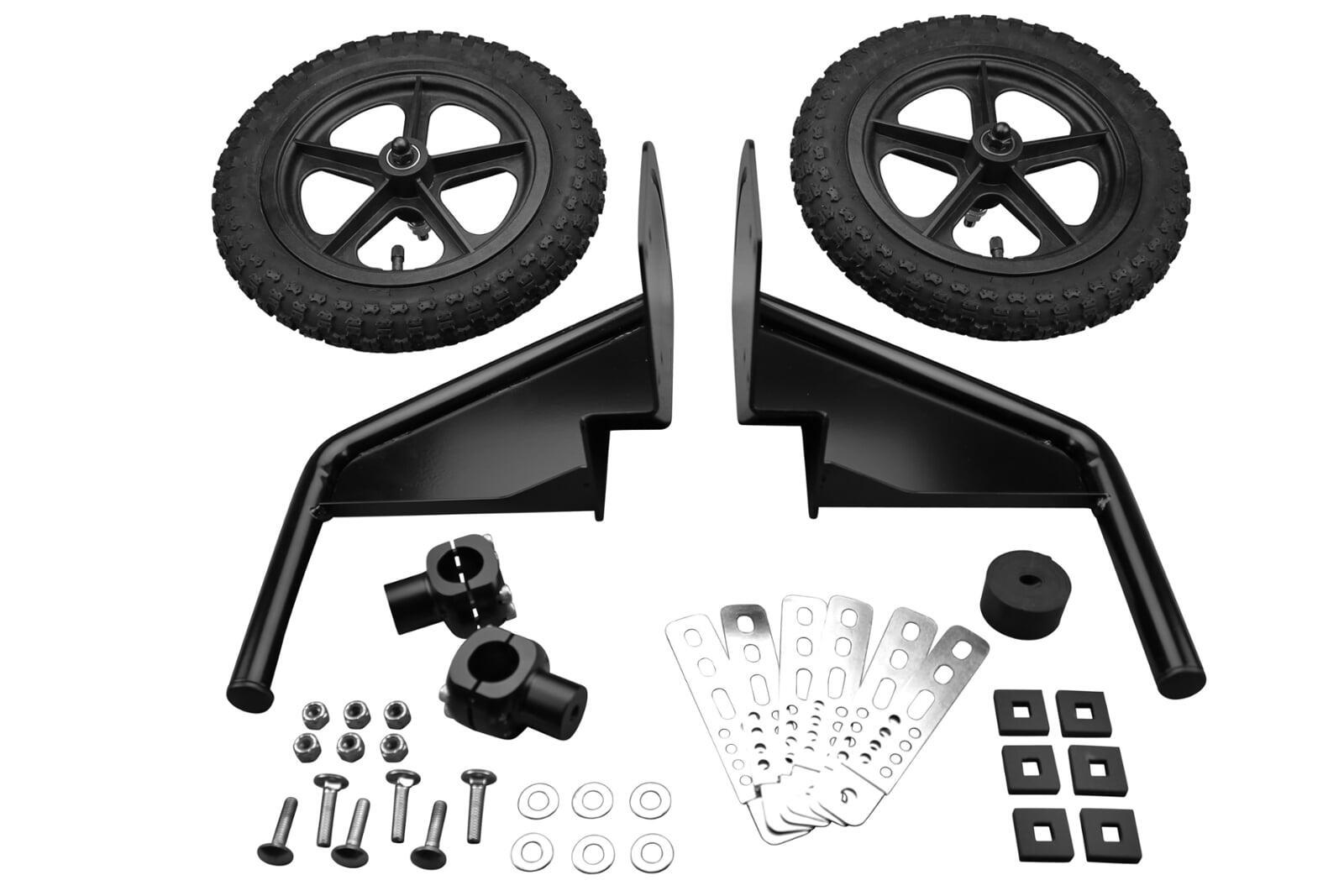
FATWHEELS takes a different approach, with heavy-duty brackets and an adjustable wheel arrangement designed for a wider range of riders. Its products can be used as a learning aid, with the wheels raised progressively, or as a longer-term support solution where appropriate.
There are three practical differences worth understanding.
Adjustable support
The wheels can be repositioned as a rider's confidence and abilities change. This allows families to adjust the level of assistance instead of treating the initial setup as permanent.
Options for different rider requirements
The range includes products for smaller bicycles, larger bicycles and riders who need a higher weight capacity. That makes it possible to explore a more suitable configuration rather than relying on a one-size-fits-all product.
A focus on adaptive cycling
FATWHEELS is designed for children, teens and adults who benefit from additional support. This includes riders with balance challenges and some developmental or coordination differences. Individual needs vary, so product selection should be based on the rider rather than a diagnosis alone.
For parents who have found conventional stabilizers too limited, these differences may make FATWHEELS worth considering.
How to Choose the Right Training Wheels for Your Child
Before ordering, take a few minutes to check the bicycle and think about how your child will use it.
1. Check the rear wheel size. Look at the marking on the rear tyre and compare it with the manufacturer's sizing information. Do not assume that all training wheels fit every bicycle in the same size category.
2. Inspect the rear axle. Some stabiliser kits require a solid axle, while others are designed for certain quick-release configurations. Check the axle type before purchasing.
3. Consider the rider's weight. Use the manufacturer's stated limit and make sure the selected kit is appropriate for the rider. A weight rating alone does not establish fit or suitability.
4. Look at the frame and gearing. Rear suspension, folding frames, shifters and unusual frame shapes can affect compatibility. If you are unsure, contact the manufacturer with the bicycle's make and model.
5. Think about the level of support required. A young beginner may need a different arrangement from an older child who has difficulty maintaining balance. Choose according to the rider's needs, not simply their age.
6. Check the available space. Wider stabilizers can affect access through narrow doorways, gates and storage areas. Measure the installed width if space is limited.
A little preparation can prevent an expensive purchase that does not fit the bicycle.
Tips for Helping Children Become Comfortable on a Bike
The equipment is only one part of the experience. A calm learning environment and a correctly fitted bicycle can make practice less stressful.
Start on a flat, open surface away from traffic. Make sure the child wears a properly fitted bicycle helmet and suitable footwear. Check the brakes, tires, fasteners and stabilizer mounting points before every ride.
Keep early sessions short. Let the child practise starting, stopping, steering and looking ahead without turning every ride into a test. Praise small improvements rather than comparing their progress with other children.
If the chosen stabilizers are designed to be adjustable, follow the manufacturer's instructions when changing their height. Increase the level of challenge gradually and only when the rider is comfortable.
Some children will eventually move to independent riding. Others may continue to benefit from adaptive support. Both outcomes can be valid, depending on the rider's abilities, preferences and goals.
Training wheels should make cycling more accessible, not create pressure to meet someone else's timetable.
Are FATWHEELS Worth the Investment?
Price matters, especially when children outgrow equipment quickly. However, the cheapest set is not always the best value if it cannot support the rider or fit the bicycle.
When comparing products, consider the quality of the mounting system, the stated weight capacity, the adjustment options and whether the kit is compatible with the bicycle you already own.
FATWHEELS offers several configurations for different bike sizes and rider requirements. Its adjustable design may also be useful for families who want to change the amount of support over time.
Before purchasing, compare the current price with the cost of suitable alternatives. Check delivery charges, warranty terms, installation requirements and the manufacturer's return policy. It is also worth contacting the company if you need help identifying the correct kit.
The goal is not to buy the most expensive option. It is to find equipment that meets the rider's needs, fits correctly and provides dependable support for its intended use.
Final Verdict: Which Training Wheels Should You Buy?
The best training wheels for kids’ bikes are the ones that suit the child's bicycle, body size and individual riding needs.
For compatible 16 to 20-inch bicycles, FATWHEELS Small is a strong starting point. Small HD is worth considering when a higher weight capacity or specific bicycle compatibility is required. For larger bicycles, the Large and Adult kits offer options for different support needs.
Before placing an order, review the product specifications and confirm compatibility with the manufacturer. A careful fit check is more useful than relying on a generic recommendation based on age alone.
FATWHEELS offers an alternative to conventional training wheels for families looking for adjustable, heavy-duty bicycle stabilization. Explore the available options, compare the specifications and choose the setup that gives your rider the right level of support.
A good bicycle setup should help make every ride more comfortable, enjoyable and accessible, whether the goal is learning to ride independently or continuing to enjoy cycling with support.